

The New Twin Towers: An Eagle Rising or a System Reasserting?
The New Twin Towers: An Eagle Rising or a System Reasserting?
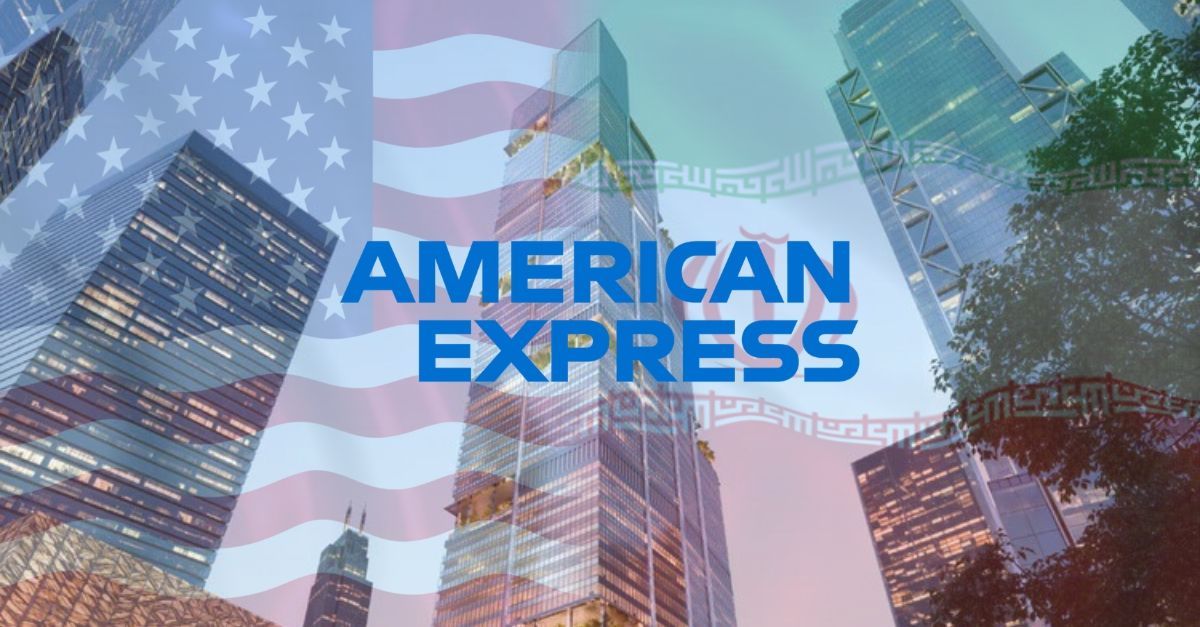
Lower Manhattan has spent more than two decades rebuilding itself, though the process has never been purely architectural. The site where the Twin Towers once stood has become something closer to a barometer, measuring not just recovery but the shifting confidence of the global financial system.
The original towers were destroyed on 11 September 2001 in attacks carried out by al-Qaeda, an event that redefined both US security policy and the wider geopolitical order. What followed was not simply reconstruction, but a slow reassertion of presence. Glass and steel returned first. Capital followed more gradually.
Today, the continued development of the World Trade Center site sits within a very different global context. The question is no longer whether the US can rebuild, but what that rebuilding now represents.
Markets tend to express themselves physically before they do rhetorically. Financial districts expand, contract, or reposition long before official narratives catch up. In that sense, the renewed activity around Lower Manhattan is less about commemoration and more about a signal.
It comes at a moment when global capital is once again reassessing its geography.
For much of the past decade, money has moved decisively towards the Middle East. Cities such as Dubai and Abu Dhabi have positioned themselves as credible alternatives to traditional financial centres, combining tax efficiency with political stability and an increasingly sophisticated institutional framework. The shift was not temporary. It reflected a broader redistribution of economic gravity.
But capital, particularly institutional capital, is rarely loyal. It is responsive.
Periods of geopolitical tension tend to compress risk tolerance. Allocations that once prioritised yield begin to prioritise security. Historically, that has meant a return to familiar jurisdictions, the United States, Switzerland, and to a lesser extent, London and parts of Europe. Not because they offer the highest returns, but because they offer the deepest systems.
Funds that expanded aggressively eastward are beginning to hedge that exposure, with recent weeks seeing a rotation into bonds, the US dollar, gold, and the Swiss franc as geopolitical risk is repriced.
That does not imply a permanent reversal of capital flows. The Middle East retains both the liquidity and the long-term strategic positioning that attracted investment in the first place. Even now, transaction volumes in certain sectors, notably real estate, remain elevated by historical standards. The infrastructure has not disappeared, and neither has the capital behind it.
What may be happening instead is a period of recalibration rather than retreat.
Funds that expanded aggressively eastward are adjusting their positioning, balancing exposure rather than abandoning it. Some capital is rotating back towards established financial centres. Some is waiting. Very little is being made in definitive long-term commitments.
The United States, meanwhile, has adopted a more assertive economic posture. Increased spending on infrastructure and defence, combined with a clearer emphasis on domestic resilience, has reinforced its position as a default safe haven. This is not a dramatic shift, but a gradual one, and therefore more durable.
Markets tend to favour systems that appear predictable, even if they are not necessarily stable. In that sense, perception matters as much as policy.
The more relevant question is where capital is prepared to move if uncertainty persists.
Beyond the traditional destinations, attention is likely to shift, at least at the margins, towards secondary markets, including parts of Africa such as South Africa and segments of Asia, where long-term growth potential remains compelling despite the associated risks.
For now, the pattern appears fragmented. Capital is not flowing in a single direction, but distributing itself more cautiously, maintaining optionality rather than committing fully to any one region.
In that environment, positioning becomes less about conviction in a single geography and more about balance. Core allocations are likely to remain anchored in the United States and other established safe havens, where depth, liquidity, and institutional stability continue to provide a foundation.
Around that, there is a growing case for selective exposure to higher-growth markets. Parts of Africa, including South Africa, and segments of Asia offer a different profile, less immediate security, but potentially stronger long-term return. These are not substitutes for core holdings, but complements to them.
The balance between preservation and growth is not new. What has changed is the speed at which that balance needs to be adjusted.
The redevelopment of the World Trade Center site does not, on its own, redefine this dynamic. But it sits within it. A visible reminder that financial power, while mobile, still gravitates towards scale, infrastructure, and perceived security.
The towers that stand there today are often framed as a symbol of resilience. That is true, but incomplete.
They are also a signal of continuity, and of a system that continues to anchor global capital, even as that capital becomes more selective in where it seeks its next phase of growth.
Share Blogs Via
Latest Blogs